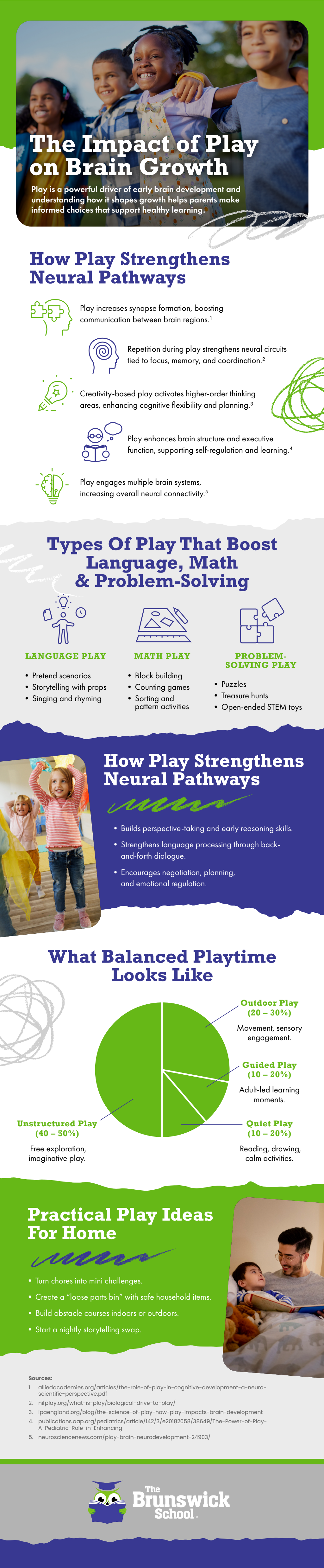
Play is one of the most important ways children learn about themselves and the world. Far from being a distraction from learning, play supports the mental, emotional, and social growth that makes learning possible in the first place. Through play, children explore ideas, test boundaries, and build skills that prepare them for both school and life. It offers a natural, engaging way for young minds to grow with confidence and curiosity.
From a developmental standpoint, play actively shapes the brain. When children engage in imaginative or hands-on activities, they are strengthening neural connections that support attention, memory, and flexible thinking. These experiences help children learn how to adapt, problem solve, and apply knowledge in new situations. Instead of simply absorbing information, the brain becomes more responsive and capable through active exploration.
Emotional and social development are also closely tied to play. Group play teaches children how to communicate, cooperate, and navigate relationships. They learn how to manage emotions, understand social cues, and respond to others with empathy. These moments of shared play create opportunities to practice patience, compromise, and conflict resolution in ways that feel natural rather than forced.
Language skills often flourish during play as well. Conversations during pretend scenarios, storytelling, and songs introduce new vocabulary and encourage expressive communication. Early math and reasoning skills appear when children sort objects, build structures, or follow game rules. Play allows learning to unfold organically, keeping children engaged while strengthening the foundations for future academic success.
Adults play an important role in supporting meaningful play experiences. Providing time for unstructured play, encouraging outdoor movement, and offering a variety of materials invites children to take ownership of their learning. Gentle guidance, such as asking open-ended questions or joining in briefly, can deepen thinking without taking control away from the child. Creating space for play does not require elaborate setups, only intention and consistency.
When play is valued, children receive a powerful message. Their creativity is welcomed. Their interests are respected. Learning does not have to be rigid to be meaningful. By prioritizing play, caregivers help children develop confidence, resilience, and a positive relationship with learning that can support them well into the future.
To explore more about how play supports healthy brain development, check out the accompanying resource from The Brunswick School, a Newport area school.