

Mumbai life can feel like a set of moving parts-work timings, traffic, family support, and daily errands. At that pace, many parents want one thing from early schooling: steadiness. Structured preschooling is getting attention because it can bring a predictable flow to a child’s day while still keeping learning playful. When routines are clear and adults are consistent, children usually settle with less stress, and parents find it easier to plan their own day.
Why Predictable Routines Matter in a Fast City?
In busy households, the hardest part is not “teaching” a child. It is keeping mornings and evenings calm. A structured preschool day can support that calm because children know what comes next, and parents know what the school expects.
When families shortlist a preschool in Mumbai, they often look for:
- Drop-off that is organised, not rushed or noisy
- A clear handover process so children are not pulled away abruptly
- Staff who guide children gently instead of using pressure
What Structured Preschooling Looks Like in Real Life
Structure is not a timetable stuck to a noticeboard. It is what happens in the small moments: how children transition, how teachers respond, and how the day holds together even when a child is tired or upset.
You can usually spot structure in:
- A predictable start (greeting, settling, simple warm-up activity)
- A planned mix of group time and free play
- Clean-up routines that feel normal, not like punishment
- A calm wind-down before pick-up
How Structure Can Support Play Without Turning it Into Pressure
Some parents worry that “structured” means early academics. It doesn’t have to. In early years, structure can simply mean play with a purpose and adults who know what they are building through that play.
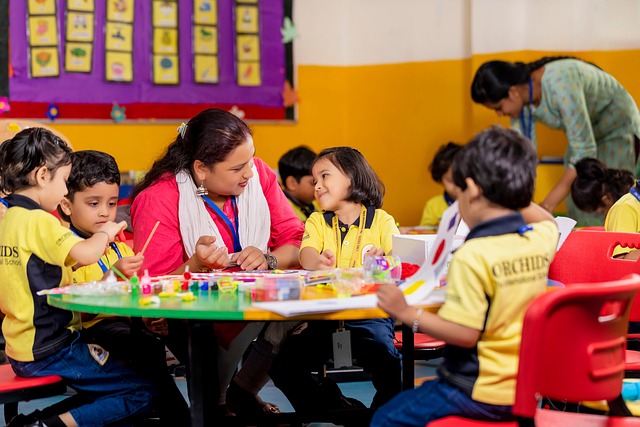
In many classrooms, this shows up as:
- Story time that builds listening and language in a light way
- Blocks, puzzles, and sorting games that introduce early thinking
- Art and pretend play that support expression and confidence
- Movement time that helps children release energy safely
The key difference is not the activity. It is the guidance, whether teachers help children stay engaged, share, and try again.
Why Drop-Off And Pick-Up Routines Shape The Whole Experience?
For young children, separation is emotional. For parents, it can be the most anxious part of the day. This is where structured preschooling can make a visible difference: children are received with warmth, and parents are not left guessing.
During a visit, watch for:
- How the staff handles tears (comfort first, not scolding)
- Whether children are guided to an activity instead of being “parked.”
- Whether pick-up is orderly and children are handed over carefully
These are everyday signals that the school takes routines seriously.
Communication That Fits Working Parents
Parents don’t need long speeches. They need clear, timely information that respects their time. In Mumbai, where many families manage packed schedules, communication style becomes a real deciding factor.
A well-run preschool may offer:
- Updates that are short but meaningful (mood, meals, participation)
- A straightforward way to share concerns without waiting endlessly
- A consistent approach to discussing behaviour, without labelling the child
If communication feels vague or defensive during a visit, it can feel harder later when you need absolute clarity.
Safety That You Can Observe, Not Just Hear About
Safety is not a one-time promise. It is a set of daily habits: supervision, controlled movement, and spaces designed for young children. Parents do not need dramatic claims-they need visible care.
While evaluating a preschool in Mumbai, you can notice:
- Whether entry and exit are monitored
- Whether teachers stay alert during outdoor play and transitions
- Whether classrooms feel child-friendly and uncluttered
- Whether hygiene routines are built into the day calmly
A safe environment usually looks well-managed and straightforward, not fancy.
Social And Emotional Skills Become a Big Priority
Mumbai children often move between different environments, home, caregiver, classes, and family gatherings. A structured preschool can support emotional balance by teaching children small, repeatable skills: using words, waiting briefly, asking for help, and calming down with adult support.
Look for classrooms where:
- Teachers acknowledge feelings and guide the next step
- Conflicts are handled fairly, without shaming
- Quiet children are noticed, not ignored
This is part of “learning” too, even if it is not written on a chart.
How To Judge Fit During Your Visit
A brochure can’t show you the real day. A visit can. Instead of focusing on displays, focus on flow: how the classroom sounds, how children move, and how teachers lead.
Pay attention to:
- Tone of voice: calm guidance or constant correction
- Transitions: smooth shifting or confusion, and waiting
- Engagement: children involved or wandering with no support
- Teacher presence: attentive participation or distant monitoring
These signals help you judge whether the structure is supportive or stressful.
Conclusion
Structured preschooling matters more in Mumbai’s busy lifestyles because it can bring predictability to a child’s day and reduce friction for families. The strongest structure is not rigid- it is warm, play-based, and consistent.
When routines are clear, communication is respectful, and safety is visible in daily habits, children get the confidence to explore and learn naturally. And for parents balancing work and home, that steadiness can make the entire preschool journey feel far easier to manage.
